In chemical, food, and logistics sectors, liquid storage carries critical leakage risks—uncontained hazardous chemicals, edible oils, or waste can cause equipment corrosion, contamination, or safety incidents. As key secondary containment, leak-proof/spill containment pallets are mandatory for compliance and risk reduction. This article highlights their core functions, key uses, and selection criteria.
Modern spill containment pallets integrate three critical protective features through advanced design:
- Integrated Sump Containment: Equipped with 10-50L capacity sumps (customizable for larger volumes), these pallets capture leaks from drums and IBCs. The sloped sump design ensures complete liquid collection, while removable grates facilitate easy cleaning and waste recycling .
- Chemical-Resistant Construction: Made from high-density polyethylene (HDPE) via one-piece molding, these pallets resist acids, alkalis (pH 1-14), and UV degradation. This ensures durability in -40℃ to 60℃ environments, suitable for both indoor warehouse storage and outdoor applications .
- Logistics Compatibility: With static load capacities of 1-3 tons and dynamic loads of 500-1000kg, they accommodate forklift and pallet jack operations. Anti-slip surfaces prevent drum displacement, while some models include anti-static grounding holes for flammable liquid storage .
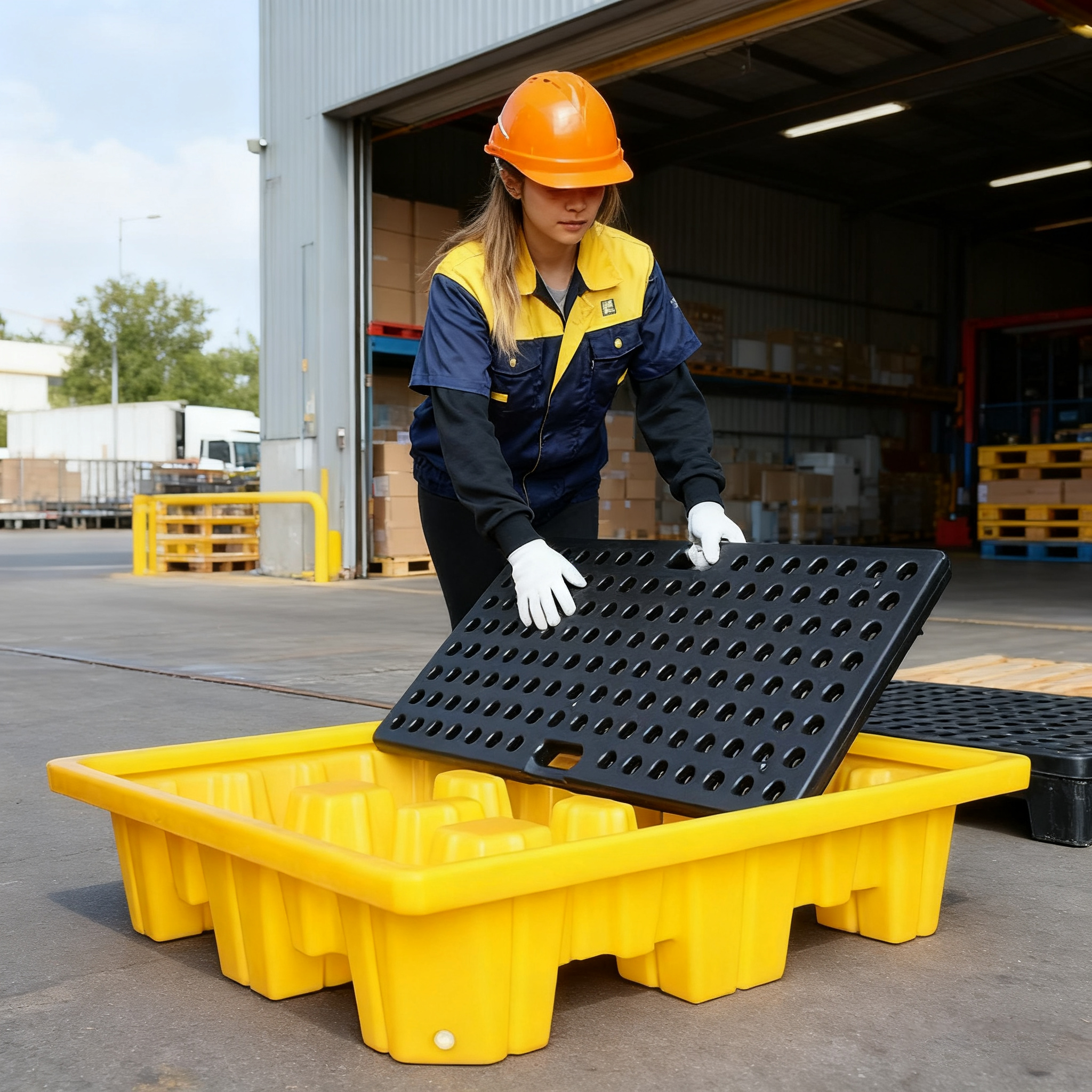
Spill containment solutions excel in these high-risk scenarios:
- Chemical & Pharmaceutical Facilities: As EPA 40 CFR 264.175 compliant secondary containment, 2-drum and 4-drum spill pallets safely store solvents, acids, and liquid APIs, preventing soil and groundwater contamination .
- Food & Beverage Industry: Food-grade HDPE spill pallets (FDA/LFGB certified) protect edible oils, syrups, and beverages from contamination, featuring easy-to-clean surfaces that maintain hygiene standards .
- Hazardous Waste Management: These pallets meet SPCC regulations for storing waste oil, solvents, and corrosive liquids, ensuring compliance during inspection by environmental authorities .
- Logistics & Warehousing: IBC spill containment pallets secure automotive fluids, cleaning agents, and batteries during transit, confining leaks to prevent cross-contamination in trucks and storage areas .
- Capacity Matching: Choose sump volume based on potential leakage—200L+ for 55-gallon drums, 10-50L for small reagent containers. Opt for modular designs when handling multiple drums .
- Material Selection:
- HDPE pallets for chemical resistance and outdoor use
- Steel or composite options for extreme heavy loads in oil/gas applications
- Food-grade HDPE for edible liquid storage
- Structural Features: Prioritize models with sealed drain ports, ≥5cm sump walls (anti-overflow), and removable anti-slip grates. Forklift-accessible designs improve operational efficiency .
- Compliance Verification: Ensure EPA, CE, or SPCC certifications. For hazardous materials, confirm adherence to "secondary containment" standards in 40 CFR 112.7 .
The industry is advancing with:
- Smart Monitoring: Pallets with liquid level sensors send real-time alerts when leaks reach critical levels .
- Sustainable Design: Recyclable HDPE pallets and nestable configurations reduce waste and storage footprint .
- Custom Solutions: Ultra-thin and rack-compatible spill control sumps optimize space in automated warehouses .
Spill containment pallets are indispensable for safe liquid storage and regulatory compliance across industries. By selecting EPA-compliant, chemical-resistant models with appropriate capacity and features, businesses mitigate risks while improving operational efficiency. For customized solutions—whether 2-drum configurations for laboratories or IBC systems for chemical plants—contact us for tailored recommendations.


