Introduction
Driven by sweeping upgrades across global end-to-end supply chains, increasingly stringent international green logistics regulations, and the widespread adoption of automated intelligent warehousing solutions across commercial and industrial sectors, conventional wooden and metal pallets are gradually falling behind the evolving operational standards of modern logistics. Traditional pallet types are plagued with inherent drawbacks including easy deformation, short service lifespan, complicated maintenance procedures, and strict usage limitations in special working environments. As a multi-functional, reusable, sanitary, robust and eco-conscious logistics load-bearing accessory, plastic pallets have evolved from optional logistics accessories into irreplaceable foundational components of standardized warehousing, cargo handling and cross-border transportation systems worldwide.
Fueled by the long-term global strategic trend of “plastic instead of wood” in the logistics industry, the market penetration rate of high-performance industrial plastic pallets has maintained steady year-over-year growth. Official industry statistics indicate that the market share of plastic pallets climbed from 28% in 2020 to 35% by the end of 2025, and authoritative market forecasts predict the figure will surge to over 55% before 2030. Unlike disposable wooden pallets and single-function metal pallets, mainstream HDPE and PP-based plastic pallets integrate multiple superior physical properties such as corrosion resistance, static elimination, low-temperature fracture resistance, waterproof performance and easy-clean surface design. These comprehensive advantages enable plastic pallets to cater to the refined and differentiated logistics operation scenarios of various high-threshold, high-precision and high-safety industrial fields.
In this in-depth guide, we systematically elaborate on six high-potential industries that will witness the most profound transformation driven by
custom plastic pallets and standard industrial plastic pallets over the next 5 to 10 years. We also dissect the tangible commercial value that customized plastic pallet solutions bring to supply chain optimization and industrial upgrading, alongside analyzing emerging technological innovations and market development trends within the plastic pallet sector. This article is tailored to offer actionable references for global bulk purchasers, warehouse operation managers, logistics enterprise executives and industrial manufacturing decision-makers.
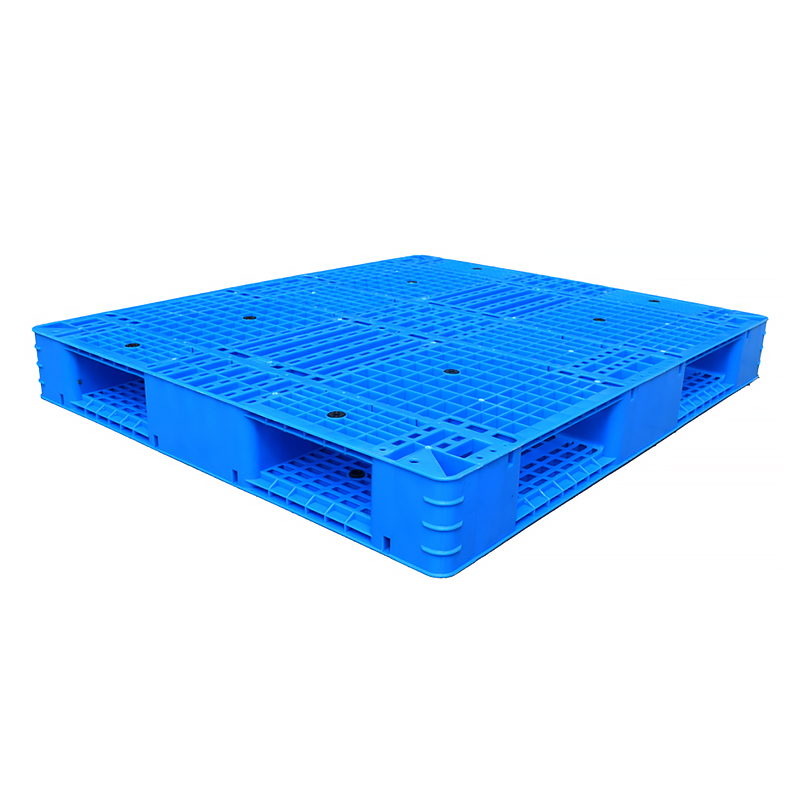
Why Are Plastic Pallets Gradually Replacing Traditional Pallets?
To better understand why plastic pallets have achieved explosive popularity across global industries and gradually replaced traditional palletizing solutions, it is critical to break down their core competitive strengths compared with wooden and metal alternatives. These inherent advantages not only help enterprises cut comprehensive logistics costs, but also assist brands in complying with international trade and environmental policies, becoming the core driving force for large-scale industrial adoption:
-
Long-term Cost-effectiveness: One-time procurement costs of premium plastic pallets are slightly higher than ordinary wooden pallets, yet their long-term economic benefits far surpass traditional counterparts. Qualified industrial-grade plastic pallets support repeated cyclic use for 5-8 years and can withstand more than 200 loading and turnover cycles. They effectively eliminate recurring expenses caused by frequent replacement, daily repair and regular maintenance of fragile wooden pallets, slashing enterprises’ comprehensive pallet management costs by 30%-50% in the long run.
-
Global Environmental & Trade Compliance: Manufactured from 100% recyclable polymer raw materials, modern plastic pallets generate no solid wood waste, pest infestation or fungal growth issues during their service cycle. All standardized plastic pallet products pass ISPM 15 international phytosanitary certification by default, requiring no additional fumigation or sterilization treatment for cross-border exports. This feature helps enterprises smoothly meet the strict environmental access rules and commodity inspection standards of European, American, Southeast Asian and other mainstream global trading markets.
-
Powerful Multi-scenario Adaptability: Plastic pallet manufacturers provide diversified customized material and structural solutions based on actual industrial demands. Product types cover anti-static pallets for electronic components, dust-free food-grade pallets for catering supplies, ultra-low temperature resistant pallets for cold chain storage, and corrosion-resistant pallets for chemical products. These customized pallets can stably operate in extreme environments including high-temperature production workshops, frozen cold chain warehouses, humid coastal storage yards and corrosive chemical storage depots.
-
Seamless Intelligent Device Compatibility: Most industrial plastic pallets are produced in accordance with global unified dimensional standards, which can perfectly match automated conveyor lines, intelligent sorting machines, AGV handling robots and three-dimensional stereoscopic warehouses. Furthermore, hollow structural plastic pallets can be embedded with RFID, NFC positioning and temperature sensing chips, enabling real-time cargo positioning, status monitoring and data statistics. This intelligent pallet management mode lays a solid foundation for fully digital and unmanned warehouse logistics.
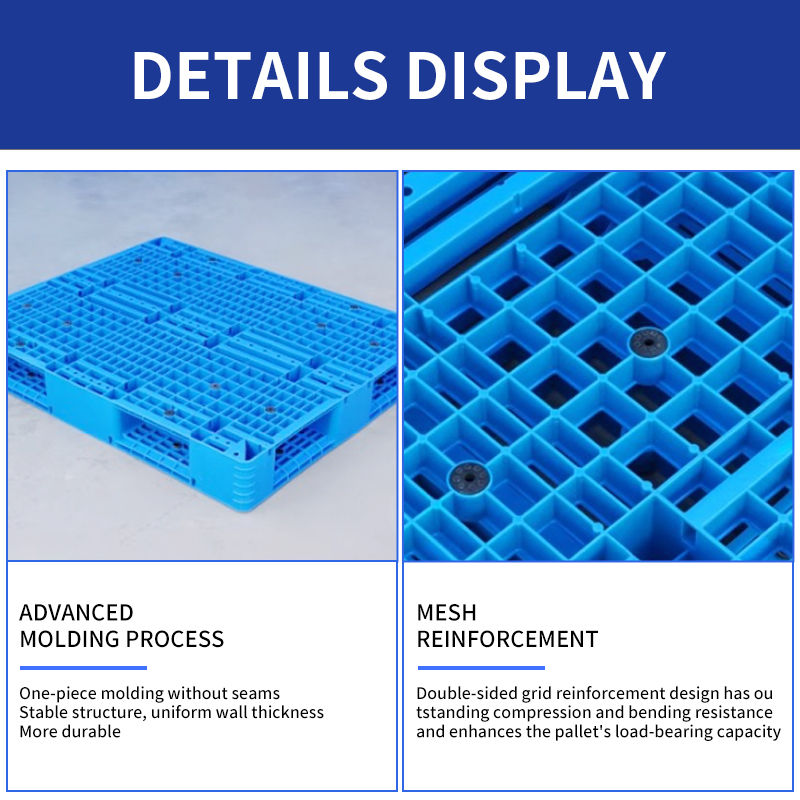
Top 6 Industries Greatly Influenced by Plastic Pallets
1. New Energy Industry
Among all downstream application markets for industrial plastic pallets, the new energy sector stands out as the fastest-growing segment, maintaining an astonishing annual demand growth rate of 35% and ranking first across all vertical industries. The entire new energy industrial chain, ranging from lithium-ion battery energy storage systems, electric vehicle assembly, photovoltaic and wind power component manufacturing to raw material transportation, imposes ultra-stringent requirements on load-bearing capacity, static resistance and operational safety of logistics carriers.
In the lithium battery and energy storage subdivision field, professionally customized anti-static plastic pallets have become the exclusive logistics carrier for storing and transporting battery cells, battery modules and finished energy storage equipment. Specially modified static-dissipative materials can effectively isolate static electricity accumulation during cargo handling and stacking, preventing static sparks from triggering battery short circuits, spontaneous combustion and other major safety accidents. Leading global new energy manufacturers such as CATL and BYD have continuously expanded their global production bases in recent years, directly driving large-scale bulk orders for anti-static custom plastic pallets. Beyond battery products, lightweight reinforced plastic pallets are widely deployed on new energy vehicle production lines for the turnover of motor parts, battery packs and interior accessories, effectively reducing overall logistics operating loads and improving assembly line efficiency.
2. Pharmaceutical & Healthcare Industry
Absolute hygiene level and cargo transportation safety are the two most core assessment criteria for logistics carriers in the pharmaceutical and healthcare industry. Restricted by strict GMP production management specifications, FDA pharmaceutical logistics regulations and unified global biological drug transportation standards, pharmaceutical and medical enterprises are comprehensively phasing out traditional wooden pallets. Wooden pallets are prone to moisture absorption, bacterial reproduction, mildew growth and debris shedding, which pose irreversible risks to high-value medical supplies and biological drugs.
Sealed food and medical-grade plastic pallets have become the mainstream standardized solution for pharmaceutical raw material storage, finished drug batch distribution, surgical medical device turnover and high-value vaccine cold chain logistics. The integrated smooth surface of medical plastic pallets supports high-frequency repeated cleaning, high-temperature disinfection and alcohol sterilization without absorbing pollutants or breeding harmful bacteria. Relevant industry research data shows that the annual market growth rate of medical special-grade plastic pallets has stabilized at 28%. Looking ahead to the next decade, low-temperature resistant enhanced plastic pallets will play an irreplaceable core role in the global low-temperature cold chain distribution of monoclonal antibodies, biological vaccines, specialized diagnostic reagents and precision medical devices.
3. Food & Beverage Industry
The food and beverage industry currently represents the largest and most mature application market for standard plastic pallets worldwide. This industry covers multiple segmented tracks including frozen quick-frozen food, dairy products, carbonated drinks and alcoholic beverages, canned food, and fresh agricultural products. Its logistics characteristics feature high-frequency cargo turnover, long-term stacking storage and extremely strict food safety access thresholds. Industry analysts predict that by 2030, the market share of plastic pallets in the global food and beverage logistics field will exceed 45%, completely surpassing wooden pallets.
For frozen food and fresh cold chain logistics scenarios, low-temperature modified HDPE plastic pallets can maintain stable structural toughness and rated load-bearing performance in extreme temperature environments ranging from -40℃ to 50℃, effectively avoiding brittle fracture and structural collapse caused by ultra-low temperature or drastic temperature changes. For large-scale beverage and snack manufacturing factories, uniformly sized plastic pallets can perfectly match automated sorting systems and intelligent stacking robots, greatly improving the overall efficiency of cargo loading, unloading and warehousing. In terms of food safety, compared with wooden pallets that easily produce wood scraps and insect debris, fully enclosed plastic pallets eliminate potential contamination risks, fully complying with the U.S. FDA food contact regulations and the EU’s rigorous food hygiene safety standards.
4. Automotive Manufacturing Industry
The global automotive manufacturing industry has formed a complete closed-loop automated production and supporting supply chain system, covering finished passenger cars and commercial vehicles, precision engine parts, automotive electronic components, interior and exterior decoration accessories, and tire products. Most precision auto parts are highly sensitive to external collision, moisture and dust; minor damage or corrosion will directly lead to product scrapping, which puts forward ultra-high requirements for structural stability, shock resistance and drying performance of supporting pallet products.
High-load integrated structural plastic pallets feature ultra-high dimensional stability and compressive resistance, resisting deformation and cracking under long-term heavy-load stacking and frequent handling. They are widely used for the cyclic turnover of engine accessories, chassis parts and transmission components on fully automated production lines. In addition, manufacturers can develop split-type customized plastic pallets with fixed clamping grooves according to the special shapes of irregular auto parts, which can fix cargo positions in real time and reduce the product damage rate during transportation to below 0.5%. With the comprehensive popularization of intelligent unmanned factories in the global automotive industry, AGV-compatible intelligent plastic pallets are gradually becoming the standard configuration for mainstream automobile OEMs and supporting component suppliers.
5. E-commerce & Third-Party Logistics
The explosive development of cross-border e-commerce and regional integrated third-party logistics has accelerated the standardized iteration of global palletized centralized transportation. Faced with rising labor costs, warehouse rental expenses and commodity inspection costs, more and more professional logistics service providers have abandoned the traditional disposable wooden pallet leasing model and turned to reusable plastic pallet asset management solutions to optimize comprehensive operational costs and upgrade service quality.
Lightweight foldable plastic pallets are specially designed for idle storage and cross-border consolidated transportation. After folding, these pallets can save up to 40% of warehouse storage space, effectively solving the space waste problem of traditional pallets during off-peak periods and cutting the warehouse occupation cost of distribution centers significantly. Meanwhile, plastic pallets exempt from fumigation certification can simplify cross-border customs clearance procedures, reduce additional inspection fees, and shorten the overall cycle of international cargo transportation. At present, top global logistics enterprises including SF Supply Chain, Cainiao Network and DHL have taken high-performance industrial plastic pallets as the core carrier of their global warehousing and distribution network layout.
6. Chemical Industry
The chemical industry includes fine chemicals, daily chemical manufacturing and hazardous chemical raw material processing, and most products in this industry have special storage and transportation attributes. Liquid chemical raw materials are prone to leakage and corrosion, while solid chemical products are sensitive to moisture and oxidation. Logistics carriers for chemical products must possess dual capabilities of anti-corrosion and anti-leakage. Traditional metal pallets are easy to rust after contacting acidic and alkaline substances, and wooden pallets will be corroded and damaged by organic chemical solvents; both cannot meet the long-term safe storage needs of chemical enterprises.
Chemical-specific plastic pallets are produced with modified PP and high-density HDPE composite materials, which can resist the long-term erosion of most acidic, alkaline and organic chemical solvents on the market. The surface of the pallet is designed with anti-slip patterns and integrated leak-proof grooves, which can collect leaked liquid chemicals in real time to prevent safety accidents such as chemical diffusion and corrosive liquid overflow. As global regulatory policies for hazardous chemical logistics become increasingly rigorous, corrosion-resistant industrial plastic pallets will achieve full popularization in the fine chemical and daily chemical manufacturing industries within the next five years.
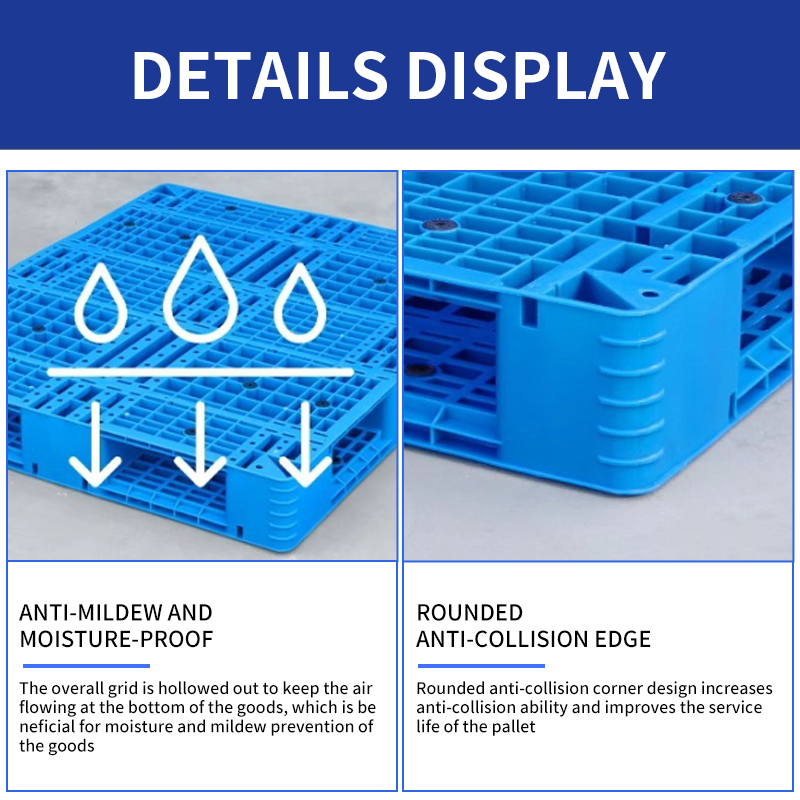
Future Development Trends of Plastic Pallets
-
Intelligent Upgrading & Digital Iteration: Intelligence and digitalization will become the core competitive barriers of high-end plastic pallet products. Smart plastic pallets embedded with RFID temperature sensors, real-time positioning modules and pressure detection chips will gain massive market traction. By building a dedicated pallet IoT management system, enterprises can realize full-life-cycle tracking of pallet usage status, cargo location, storage temperature and turnover frequency, realizing data-driven refined logistics management and greatly reducing asset loss.
-
Material Greenization & Low-carbon Production: Driven by global carbon neutrality goals and green industrial development policies, recycled plastic particles and biodegradable composite polymer materials will be widely applied to pallet mass production. Relevant industry plans show that by 2030, mainstream plastic pallet manufacturers will reduce the carbon emission intensity of production links by 25%. Green plastic pallets will help downstream manufacturing and logistics enterprises lower their carbon footprint, assisting brands in meeting ESG assessment requirements.
-
Customized Segmentation & Scenario Specialization: The plastic pallet market will gradually shift from standardized universal products to segmented customized solutions. Professional manufacturers will launch exclusive pallet products tailored for niche high-threshold scenarios, including ultra-low temperature deep cold chain storage, dust-free sterile workshops for electronic semiconductors, explosion-proof warehouses for hazardous chemicals and high-cleanliness pharmaceutical production workshops, to satisfy the refined and personalized procurement demands of different vertical industries.
-
Standardized Globalization & Shared Leasing: International industrial organizations will further unify the dimensional specifications, load-bearing standards and safety detection indicators of cross-border plastic pallets. Unified global standards will greatly simplify the cross-border circulation, leasing and recycling procedures of plastic pallets, promote the construction of a global shared pallet rental network, and effectively reduce the overall logistics threshold for small and medium-sized cross-border trading enterprises.
Conclusion
As the most fundamental and widely used load-bearing carrier in the modern industrial supply chain, plastic pallets have broken the positioning of simple auxiliary logistics tools. At present, high-performance standard and custom plastic pallets have become core strategic resources that promote digital warehouse transformation, green low-carbon upgrading and comprehensive cost reduction across various industries. The six core industries analyzed in this article, covering new energy, pharmaceutical healthcare, food and beverage, automobile manufacturing, cross-border logistics and fine chemicals, will jointly become the primary growth engine of the global plastic pallet market in the next decade.
For industrial product manufacturers and third-party logistics service providers worldwide, phasing out outdated traditional wooden and metal pallets and deploying high-performance customized plastic pallet solutions is not only a necessary measure to adapt to international green trade policies and cross-border customs clearance rules, but also a key strategic layout to optimize internal supply chain operating costs, improve cargo transportation safety and enhance overall market competitiveness. Supported by continuous material innovation and intelligent technological iteration, multi-functional green plastic pallets will reshape the overall operation mode of global modern logistics and usher in a new era of standardized and intelligent palletized transportation.
FAQ
1. Are plastic pallets better than wooden pallets for export?
Absolutely yes. Plastic pallets are recognized as the optimal pallet solution for cross-border export and international logistics. All qualified industrial plastic pallets comply with ISPM 15 international phytosanitary standards and do not require extra fumigation, sterilization and other pre-export treatments, which saves abundant time and additional commodity inspection costs for exporters. Moreover, plastic pallets feature stronger compression resistance and damage resistance during long-distance ocean and air transportation, and they can be recycled for repeated use after arriving at the destination, bringing higher long-term return on investment compared with disposable wooden pallets.
2. What type of plastic pallet is suitable for cold chain logistics?
Modified HDPE low-temperature resistant plastic pallets are the most suitable option for professional cold chain logistics. This upgraded HDPE material undergoes special low-temperature toughening treatment, which can maintain stable structural toughness and nominal static/dynamic load-bearing capacity in a long-term low-temperature environment ranging from -40℃ to 0℃. It will not experience brittle cracking, surface peeling or structural deformation, fully adapting to deep-freeze warehouses, refrigerated transport vehicles and long-distance cold chain cargo turnover.
3. How long is the service life of a standard plastic pallet?
Under standard indoor warehouse storage and conventional cargo turnover conditions, ordinary PP and HDPE standard plastic pallets can achieve a service life of 5 to 8 years, supporting more than 200 stacking and handling cycles. Even in harsh outdoor or low-temperature environments, their service lifespan is still 3-5 times longer than traditional wooden pallets. By contrast, disposable wooden pallets usually have an effective service life of only 6 to 12 months, and are extremely vulnerable to damage during cross-border transportation and frequent turnover.


