Pallets are essential for warehousing, product storage, and global logistics. For years, wooden pallets have been the first choice for most businesses due to their cheap initial price and easy access. However, as supply chains pursue higher efficiency, stricter hygiene standards and lower long-term operational costs, traditional wooden pallets can no longer meet modern logistics demands. Nowadays, more manufacturers, logistics firms
The Main Limitations of Wooden Pallets
Although wooden pallets seem cost-effective at first glance, they come with multiple drawbacks that increase hidden costs and operational risks over time:
Short lifespan & frequent replacement. Made of natural wood, traditional pallets are vulnerable to moisture, mold, rot and insect infestations. They are prone to cracking and damage during forklift handling and stacked storage. On average, wood pallets only last 5-10 cycles, requiring frequent repurchases that raise your long-term procurement expenses.
Safety & hygiene issues. Splinters and loose rusty nails on worn wooden pallets may injure workers and damage packaged goods. Besides, the porous wood structure easily accumulates bacteria, dust and stains, which cannot be cleaned thoroughly. This makes wood pallets unsuitable for food, pharmaceutical and cold chain industries with strict sanitary requirements.
Complicated cross-border shipping. Following ISPM 15 international rules, all wooden pallets for overseas delivery must be fumigated or heat-treated before customs clearance. The extra certification process wastes time, increases additional fees, and may even delay your international shipments.
Key Benefits of Plastic Pallets
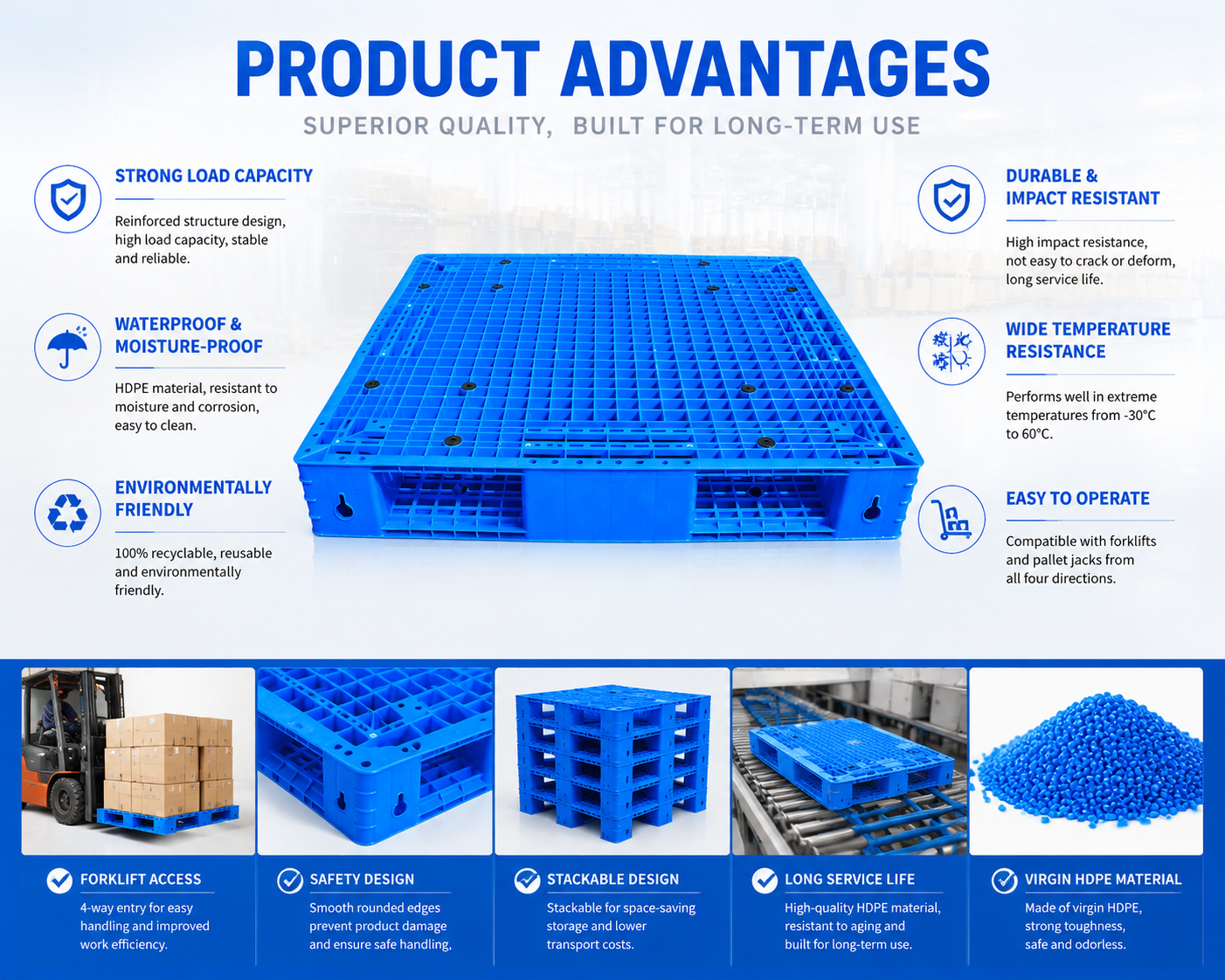
Manufactured with high-quality HDPE and PP materials, integrated-molding plastic pallets solve all the pain points of wooden pallets, delivering greater value for long-term logistics operations:
Superior durability. Plastic pallets are waterproof, corrosion-resistant, mildew-proof and insect-free. They adapt to humid warehouses, low-temperature cold chains and various harsh working environments. With a lifespan of over 100 circulation cycles, they are 10-20 times more durable than wooden pallets and greatly reduce repeated procurement costs.
Safer & easier to maintain. Featuring smooth surfaces without nails or sharp edges, plastic pallets eliminate workplace injury risks. Their sealed surface allows quick cleaning and disinfection to meet global sanitary standards, perfectly fitting hygiene-sensitive industries.
Customs-friendly for global trade. Exempt from ISPM 15 fumigation and heat treatment, plastic pallets can be directly used for cross-border transportation. They simplify customs clearance procedures, shorten delivery cycles and optimize the shipping experience for international traders.
Cost-saving & sustainable. Lighter than wood pallets under the same load capacity, they help cut down overall freight and fuel costs. Additionally, waste plastic pallets are 100% recyclable. The eco-friendly design assists enterprises in reducing carbon footprints and satisfying green procurement requirements from global partners.
Cost Overview: Wood Pallets VS Plastic Pallets
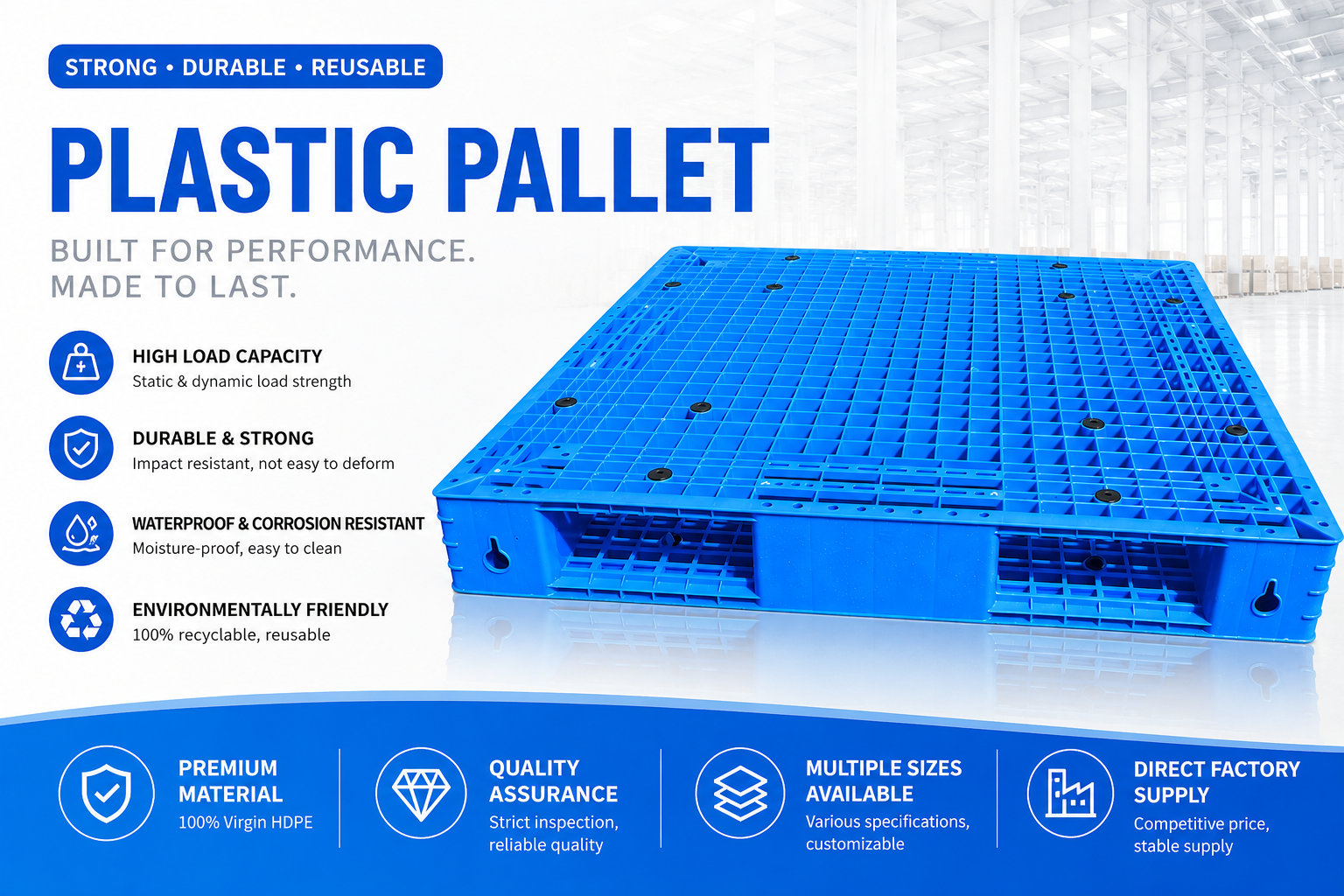
Wooden pallets only have a lower one-time purchase price, yet high replacement, maintenance and certification costs make them uneconomical for long-term use. In contrast, plastic pallets require higher upfront investment but have nearly zero maintenance fees and an ultra-long service life. For most circulating logistics scenarios, plastic pallets can slash your comprehensive operational costs by 20%-30% annually.
Final Conclusion
Wooden pallets are only suitable for one-way, short-distance and temporary low-budget shipping. If you aim to stabilize supply chain operations, control long-term costs and expand global business, switching to plastic pallets is a worthwhile strategic upgrade for your company.
Looking for high-quality, customizable plastic pallets to replace outdated wooden ones? Contact our team right now to get tailored logistics pallet solutions for your business!


